
Services
Understand the work. Design the change. Put it into practice.
IES helps growing and changing organizations make the operating model catch up with the business. We establish what is happening, decide what must change and carry that decision into implementation.
Match the situation to the work.
Each area explains when IES is useful, what the work includes and what the client receives.
01Operating Model & Enterprise Transformation
When it helps
Work crosses teams, systems or responsibilities.
What IES does
IES maps the current state, identifies constraints, clarifies ownership and designs an implementable future state.
What you receive
- Current-state and future-state operating models
- Leadership decisions, roles and process ownership
- Implementation priorities, owners and resource needs
- Training and performance measures
02Operational & Financial Performance
When it helps
Margin pressure, backlogs, capacity constraints or fragmented information are obscuring the decisions that matter.
What IES does
IES connects operating and financial evidence to identify contributing causes, compare options and establish the information, controls and review routines needed to act.
What you receive
- Financial and operating baseline
- Margin, cash-flow and capacity scenarios
- KPI definitions and reporting requirements
- Prioritized actions and review procedures
03Technology, Data & Super Intelligence (SI) Enablement
When it helps
Your organization is introducing SI, connecting existing systems or changing how teams use information—and needs a practical plan for implementation.
What IES does
IES defines the use case, examines the current workflow and identifies the information and system connections required. We establish responsibilities, human review points and testing criteria, then plan and coordinate implementation with the people responsible for the work. Technical specialists are involved where engineering is required.
What you receive
- Workflow, data and integration requirements
- Defined responsibilities, human review and exception handling
- Pilot scope, testing criteria and performance measures
- Implementation planning, training and adoption support
04Research & Strategic Analysis
When it helps
An investment, external change or strategic question requires evidence beyond the information currently available to the team.
What IES does
IES defines the question, examines authoritative sources and internal evidence, and compares alternatives against objectives and constraints. Assumptions, uncertainties and the basis for the recommendation remain visible.
What you receive
- Research briefs and evidence reviews
- Options, scenarios and feasibility comparisons
- Business cases and recommendations
- Dependencies, risks and next steps
05Business Continuity & Succession Readiness
When it helps
The business depends heavily on an owner or a small number of people and needs to prepare for an unexpected absence, planned succession, transfer or exit.
What IES does
IES maps the work, decisions, relationships, information, access and financial dependencies required to keep the business operating. We identify concentration risk, clarify backup responsibilities and coordinate the operating preparation needed before a transition.
What you receive
- Business-dependency and critical-work map
- Continuity roles, backups and access responsibilities
- Financial-resilience scenarios and decision points
- Knowledge-transfer and succession-readiness plan
Fixed-scope delivery
SheetLoop spreadsheet services
A small workbook repair, data cleanup or formula issue with a defined result. Explore the $79 offer and try a browser-based cleanup demo.
Sectors we support
See how the work changes by sector.

Connect the work behind quality, readiness and delivery.
For medical device, pharmaceutical, biotech and healthcare organizations, including CROs and CDMOs.
- Workload & capacity
- Examine backlogs, release delays and resource demands across regulated workflows.
- Processes & controls
- Clarify responsibilities, verification steps and handoffs across quality, regulatory and operations teams.
- Data & systems
- Define how product records, submissions and operating information move between systems.

Translate financial change into operating requirements.
For financial organizations assessing new infrastructure, products, technology and regulatory developments.
- Operating model
- Map how a proposed change affects client servicing, transactions, reporting and responsibilities.
- Controls & dependencies
- Examine reconciliation, exceptions and dependencies across providers and systems.
- Implementation readiness
- Define requirements, resource needs and sequencing before introducing new workflows.
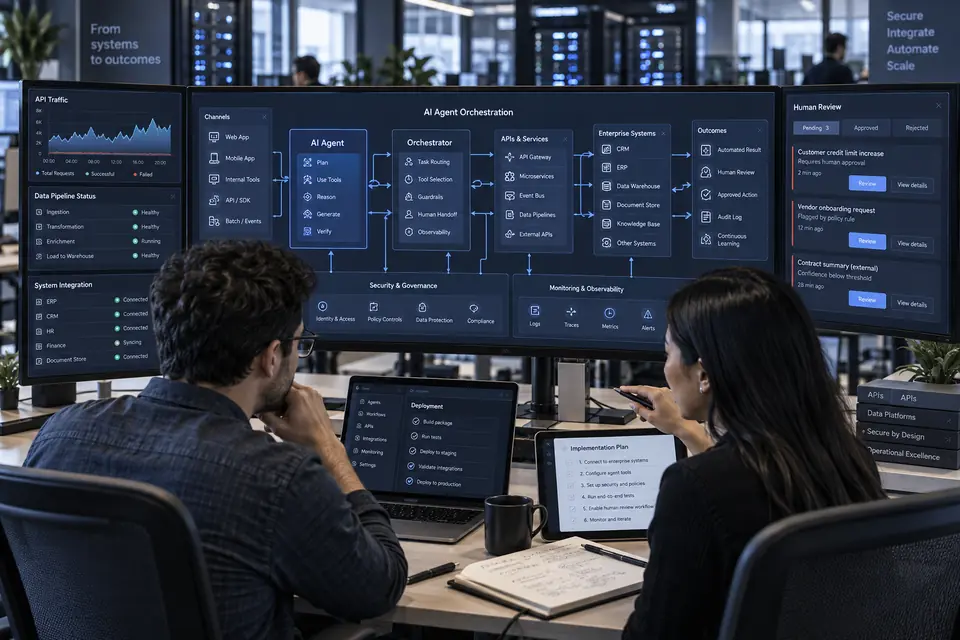
Design the business conditions technology needs to work.
For organizations introducing new systems, integrating data or incorporating SI into everyday work.
- Business requirements
- Connect the use case with workflows, information needs and measurable acceptance criteria.
- SI & human oversight
- Define review points, decision authority, exception handling and accountability.
- Adoption & delivery
- Coordinate implementation, testing and training with internal owners and technical specialists.

Improve how programs and internal operations are delivered.
For government agencies, nonprofits and delivery partners coordinating programs, operations, technology and administrative work.
- Program operations
- Map workflows, clarify responsibilities and improve coordination across teams and external partners.
- Performance & resources
- Connect workload, capacity, funding, financial and operating data so leaders can identify constraints and make informed decisions.
- Technology & reporting
- Define business requirements, data flows, controls, system needs, automation opportunities and reporting requirements.
Agree on the commitment
We define deliverables, responsibilities, timing and fees before work begins. Scope reflects the functions and systems involved, available evidence and implementation support needed.
Build the capacity to proceed
We assess competing priorities, available resources and the controls that must hold during change. Where prerequisites are missing, preparation becomes part of the implementation plan.
Review and adjust
Ongoing advisory helps leadership compare results with expectations, resolve emerging issues and adjust priorities.
What would you like to improve or accomplish?
Tell us what is happening, what needs to change and where progress is getting stuck.
Request a Conversation